In the 1970-1980s, arcade machine hardware represented the cutting edge of game hardware. Home computers and consoles would be years behind the CPU and graphics power of their contemporary arcade counterparts. This was especially true for audio hardware.
During this era, arcade audio hardware was also incredibly varied compared to now. and although CPU processing power and memory was limited, specialized audio hardware was used to compensate. Here are some of the types of custom audio hardware used in this time period:
mechanical sound
digital hardware synthesis
analog hardware synthesis
digital software synthesis
programmable sound generators
voice synthesis
ROM samples
Cassette tapes
FM synthesis
LaserDisc analog audio
The articles below will dive into some of these early techniques, including digital hardware synthesis in Pong, and digital software synthesis of Defender.
Pong was the second video game to be released to the public, preceeded only by Computer Space (1971). Both games were created by Atari (formerly known as Syzygy Engineering). Pong was a two-player tennis game controlled with analog knobs, designed by Allan Alcorn in 2 months as a 'warm-up exercise' for the job. It ended up being very commercially succesful, selling 35,000 arcade cabinets, netting the newly formed Atari a profit of 17.5 m$ (~ 135 m$ in 2026).
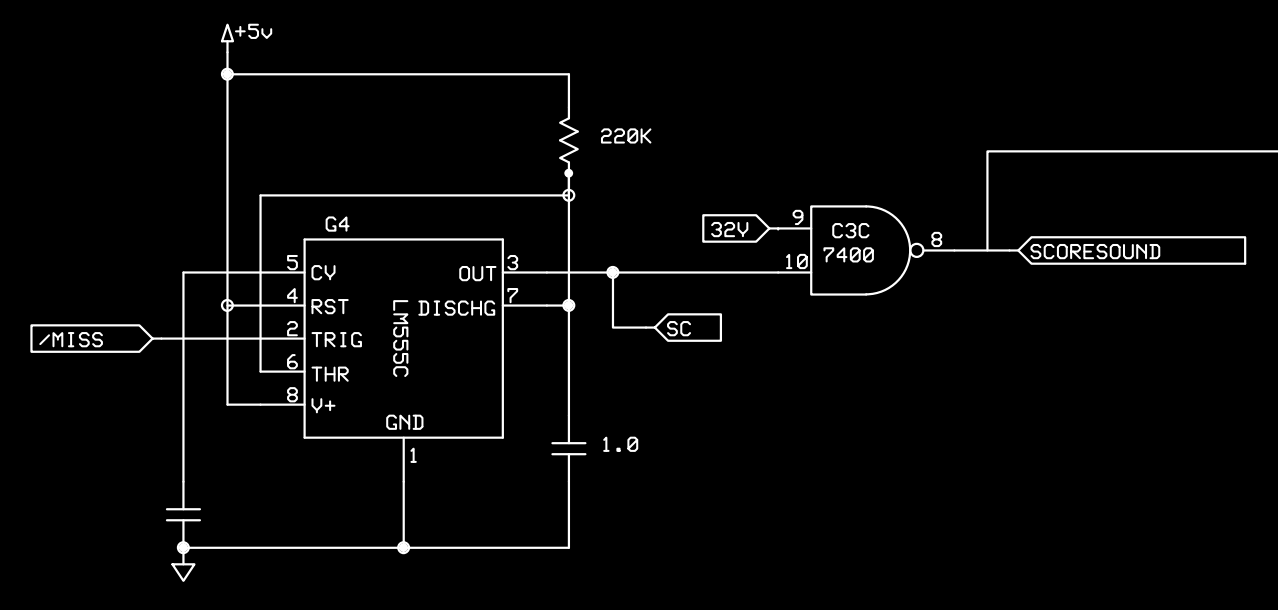
Pong was designed using discrete TTL components, with no CPU and thus no software. The sound 1-bit digital and is generated directly from logic signals on the circuit board.
This article goes deep into the Pong hardware to investigate how the sound is generated.
The 1981 arcade classic Defender by Williams was a groundbreaking game in many ways. It had some of the most complex controls for any game at the time, with its two-way joystick, and 5 buttons. It was more difficult to learn than most arcade games, but once mastered, it was a very fluid and dynamic experience. It scrolled with variable speed in two directions - at its fastest very tricky to control, and it had a mini-map with enemy and human locations, a key feature for playing the game well.
The game had a unique sound design, brutal digital synthesis emulating laser fire, explosions, and strange alien voices. Only one voice at a time, but every sound was as intense as it could possibly be. The sound design and hardware came straight from Williams' pinball machines, where the tradition was to be as loud and noticeable as possible.
This article is about the hardware of the Defender arcade machine from 1981, with emphasis on the sound board, which was originally designed by Eugene Jarvis for a pinball machine.
The chips that make up the sound hardware and how they work together is described, and
finally, there is a short analysis of the theoretical limits of the sound hardware in terms of sample rate and waveform duration, and how these constraints motivate custom sound algorithms over sample playback.
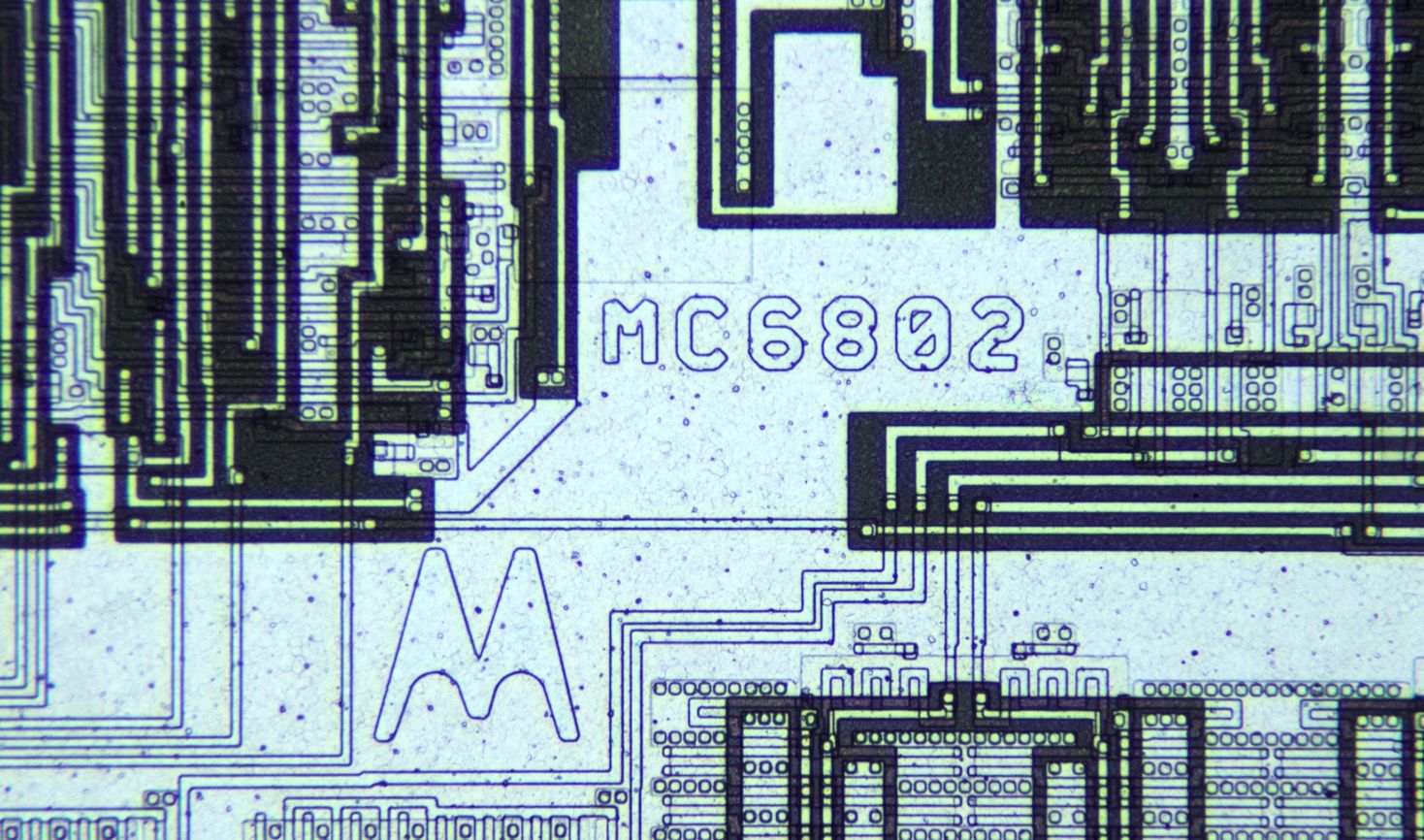
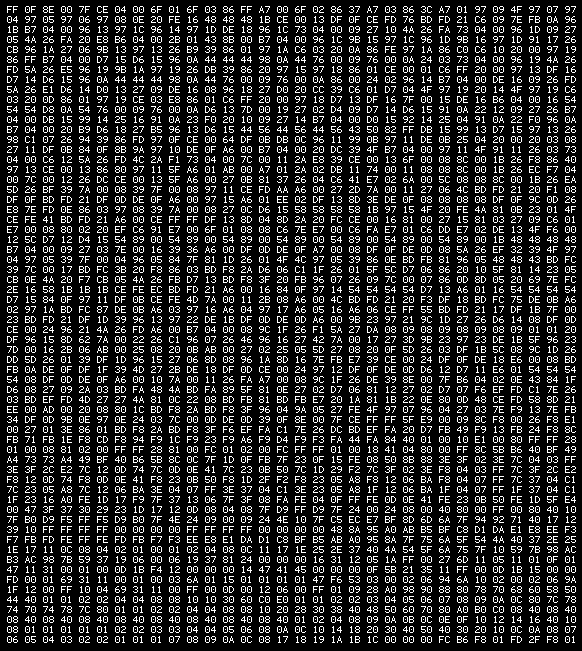
In this article, we will look into the audio software of Defender, 2 KB of MC6800 machine code located in a ROM chip. This code generates all the different sounds heard in the game. We will disassemble the sound ROM so we can inspect it in assembly code form. The disassembled code with some annotation is available for download. After disassembling the ROM, we will reassemble it and check if it is exactly the same as the original, verifying the correctness of our disassembly.
In the late 1980s throughout the 1990s, a particular type of music software was dominating in home computer games and in the demoscene: trackers. They were bare bones music composition programs, you would even call them glorified hex editors. Especially the Commodore Amiga would be known for this type of software. Apart from the music written for many games and demos during this period, this class of software was also key in developing certain musical styles, such as jungle.
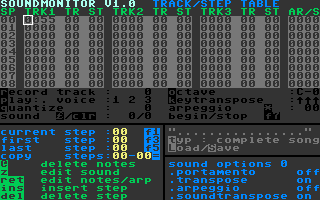
One of the most well-known composers for games on the Commodore 64 and Amiga, Chris Huelsbeck, wrote his own music software for the Commodore 64. It was named 'Soundmonitor' and was released in October 1986. It had a raw programmer-style interface with 3 tracks and music listed as a series of commands.
This type of music software would be known as 'trackers' and Soundmonitor would give rise to hundreds of different implementations of the same core idea, particularly on the Commodore Amiga and the PC.
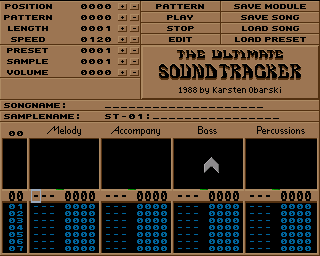
The earliest well-known music tracker software was Chris Hűlsbeck's Soundmonitor for the Commodore 64. Inspired by Soundmonitor, Karsten Obarski created 'The Ultimate Soundtracker' for the Commodore Amiga and released it in 1987. Combined with the digital sampled audio capabilities of the popular home computer, the Commodore Amiga, trackers became a phenomenon in home music production in the 1980-1990s.
Game history can be seen as a dialogue between ideas and constraints. This dialogue is presents in all aspects of game development, including game audio.